by Paul Bernstein, Ph.D.
Nurse Janet Schwaninger, coordinator of cardiology care at Barnes-Jewish Hospital, a teaching venue of the Washington University medical school (St. Louis, Missouri), this summer saw her three year study of near-death experiencers published in the Journal of Near-Death Studies. Her research is only the third prospective* study of cardiac-arrest neardeath experiencers published in the US, and the fifth ever in the world. Vital Signs is delighted to have had the opportunity to interview Nurse Schwaninger, to gain from her an inside view of the practical rigors of designing, conducting, and publishing such valuable research.
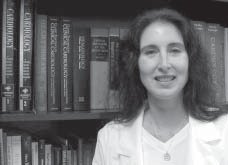
Photo by Linda Jacquin
|
Barnes Hospital
Cardiovascular Coordinator
—and NDE researcher—
Janet Schwaninger, RN, BSN |
VS: What started you in this work?
JS: In 1989 I witnessed the cardiac arrest of a medical colleague, during his recovery after a heart-valve replacement. Many hospital personnel knew this physician, and a number of us were present at the time of his arrest. It took seven defibrillations before he was revived.
When he became conscious, he told us he had witnessed the entire arrest, from a vantage point to the left in the upper corner of the room. He described everything that we’d done, and knew exactly how many times we had defibrillated him. Then he told us that there was a spiritual entity with him during the entire arrest who was very reassuring to him, telling him that everything would be okay, no matter how things turned out—which surprised him very much. He had never heard of an NDE before. “I felt totally conscious and totally aware, and yet I know that medically I was virtually dead because you defibrillated me seven times.”
*Interviewing all revived patients in a hospital unit, before knowing which ones have had an NDE.
Page 9 of 9
stations wanting me to appear on more shows. The international issue of the Miami Herald put out a story on our study. From that I got responses from scientists and other individuals in Costa Rica, Ecuador and Peru. People were so pleased that we had done the study, and thought it was significant, expressing their interest, a lot of physicians and medical professionals just contacting me, being in support, and sharing their experiences or those of their patients or their personal loved ones.
VS: If somebody fairly new in nursing or cardiology, perhaps even a medical or nursing student, were leaning towards doing such a prospective study, what kind of advice would you give them?
JS: Not to give up! Because it’s so significant, and there’s something so important that’s being said by the patients, significant information that’s being given to humanity. And not just the message is important, but how we see that such a brief experience can so profoundly change a person’s life. How important it is to recognize and address these experiences in the management and care of patients.
Paul Bernstein is on the editorial team of Vital Signs. He is very grateful to Melissa Fellows for transcribing the original interview.